Trads & shernis, raitas & xoomers, Brahmanical patriarchs & sanatani Chineses, it is with great pleasure that I announce, in time for your resolutions for the sanatani-christian new year:
THE OFFICIAL DIET FOR THE NEW SAṄGHĪ MAN
Contents
(anyone does not follow this to the letter, and anyone who does not instantly hit retweet, is condemned to mleccha status effective immediately. not joking.)
Health/diet discourse in India is low-signal slop dominated by useless truth-agnostic agenda-peddlers like:
- potbellied boomer uncle-aunties who hate protein and think 3 spoons of dal has enough protein for 7 lifetimes
- gore-log-kyā-kaheṅge shitlibs who hate everything Indian
- insecure bhōsaḍpillers who want to blame their poor choices on either 3000, 200, 19 or 10 years of oppression depending on their political persuasion (“I’m skinny-fat because of Bengal Famine saarr”)
- halfwits who got jio yesterday and formed all their opinions based on the first crackpot blog they found (“broo look at these SCIENTISTS (unemployed schizophrenic quacks) who say butter and ghee are actually good for you”)
- and of course, dehātī AIDS-monkeys who think they are fat and unhealthy because of “preservatives” in food and “adulteration” in paneer, rather than because they are gobbling up deep-fried vaḍāpāv, gulāb jāmun ice cream and burgers made out of shitpatties scraped off the streets in 2012 before Modi came to power and put toilets in every home.
If you want to drain the slop and become HIGH-SIGNAL ELITE SAṄGHĪ CAPITAL like me, you must forget everything you think you know and just listen to me. Again, as with all other things.
AThe goals of health are four-fold:
- Avoiding heart disease and cancer
- Avoiding micronutrient deficiencies
- Building a powerhouse of a brain and body
- Building capacity for mass-REPRODVCTION (high T for men, industrial-standard menstrual cycle for women)
minor goals: avoiding kidney and liver failure, spine knees and bones of rearden metal, a powerful neck and jaw, immunity, good teeth eyes skin hair, flexibility
BThe method to achieve these goals is four-fold:
- Eat according to this guide.
- Exercise — VO2 max training ~2-4 days/wk, lift 4-5 days/wk, at least light cardio everyday.
- <12% bodyfat for men, 20% for women.
- Sleep at a consistent time and get sunlight upon waking.
Take a moment to appreciate how surprising and fortunate it is that this is all you need to do, to achieve all four goals of health — that there are almost no trade-offs between the goals of health; the things you must do are the same for all. What is good for your brain is what is good for your heart is what is good for building muscle. I can count the exceptions on my fingers. You have nothing to lose but your vaḍāpāv.
This guide focuses on diet, but exercise > diet. VO2-max is the single greatest predictor of life expectancy, and is best trained by HIIT (google it). Unless you’re fat, then diet matters more until you lose it.
other helpful things:
- chugging water (your machine needs coolant, plus your kidneys demand it)
- get an air purifier if you live in the karmabhūmī
- use a standing desk if you can, and exercise whenever you feel like taking a break while working
CThe main contents of your diet >> “preservatives”
Look, I get that you’re mad about Annadātā Kisāns™ putting pesticides in our foods, adulteration cases, etc. And yeah it sucks, it should be fixed.
But Gujarat has been routinely busting fake paneer/milk rings for years1—this hasn’t made them some health superpower, because—with the exception of some serious cases like turmeric—the effect of all this adulteration, additives whatever is marginal compared to what is in your own hands: the actual foods you choose to eat.
And no, your watermelon isn’t “adulterated” because it turned tissue paper red in your at-home science eggjperiment. It’s just red, and you are just basic.
Cyanide pills are poisonous due to the cyanide, not due to synthetic dyes or the plastic bottle they come in.
1Ironically instead of being praised for it, fat reddit dorks would make fun of such headlines calling them a “scammer state”.
Look, I get that you’re mad about the state of the food supply chain. Our beloved Annadātā Kisāns™ putting pesticides in our foods or growing crops in soils without checking for heavy metal content, cases of adulteration, etc. And yeah, I mean, it sucks, it should be fixed.
But Gujarat has been routinely busting fake paneer/cheese/milk rings for years (ironically instead of being praised for it, fat reddit dorks would make fun of such headlines calling them a “scammer state”), and this hasn’t made them some health & fitness superpower, because—with the exception of some serious cases like turmeric and Sudan red dye—the effect of all this adulteration, additives whatever is marginal compared to what is in your own hands: the actual foods you choose to eat.
And no, your watermelon isn’t “adulterated” because it turned tissue paper red in your at-home science eggjperiment. It’s just red, and you are just a fat reddit dork who falls for whatever lowest-effort pseudo-science that comes on your feed.
Cyanide pills are poisonous due to the cyanide, not due to synthetic dyes or the plastic bottle they come in.
If you’re eating deep-fried foods, sugar, refined grains — you have forfeited your right to complain about FSSAI, packaging, and all such relative trivialities. If you’re eating at restaurants, or drinking alcohol, I’m going to specially collect all the adulterated shitpatties left by deported Bangladeshi hawkers and inject them into your veins.
Improving your overall diet, to have correct macro ratios, correct fruits and vegetables and nuts and spices, eliminating junk, will be infinitely more valuable than avoiding “preservatives”.
DThings that are ALWAYS bad for you.
- Any food at or ordered from a restaurant. Full of gutter oil.1
- Processed meats.
- Deep-fried foods.
- Drugs, including alcohol and smoking.
- Trans-fats.
- Red meats.
- Refined grains: white rice, maida, many flours and ravās2
- Sugar (yes, jaggery, honey and syrups are sugar).
- Saturated fats: ghee, coconut oil3
Healthier alternatives for each of these:
- Saturated fats→monounsaturated fats (avocado/olive/mustard oil).
- If you like the taste of ghee, try shallow-frying some milk powder in some avocado oil.
- Sugar→stevia, allulose, monk fruit.
- Make sure to check it’s pure stevia extract — it will be a very tiny quantity, either powder or drops, because it’s like 100x sweeter than sugar. But even artificial sweeteners like sucralose are better than sugar.
- Refined grains→Legumes, whole grains, root vegetables.
- Deep-fried foods→Air-frying.
- Drugs→Rat poison. (this is a joke, don’t sue me if you kill yourself)
- Eating out→Learn how to cook, you overgrown child.
- The fundamental reason why eating out, or eating ultra-processed foods is always unhealthy, is that optimizing really well in an even slightly imperfect direction leads to inevitable disaster. Markets are really good at optimization, but they optimize for what consumers can transparently see (e.g. taste, color). They will sacrifice enormous amounts of “healthiness” to squeeze out even the slightest gains in taste, because the consumer cannot observe or verify “healthiness” and so it doesn’t affect his decision to buy.
EEating healthy is easy.
“How can you tell me to quit eating out entirely sār, my hostel doesn’t have a kitchen sār, I need to eat sweets at least occasionally sār”
-
Gaining (or even maintaining) weight while eating healthy takes real effort.
If this seems surprising to you, you have the wrong idea of what “eating healthy” means.
-
Once you quit, you will naturally stop craving for junk after a few months
Because the gut bacteria that were craving for it will get replaced by strains that crave for The New Saṅghī Man’s diet.
-
Cooking is extremely easy.
Foids have kept this secret from you to make you think their job is irreplaceable. There’s a lot of stuff you can cook easily without any heat/kitchen (keep reading – see “bare minimum diet” below).
FMacro ratios.
Diagram shows the macronutrients, i.e. the bulk of your food, which you can see and feel — and the % of your daily calories each should account for4.
up to 30% if you’re losing weight
For a 3000 calorie diet, these ratios amount to:
- less than 20g SFA
- 60g MUFA
- 20g ω-3, 20g ω-6
(In all likelihood you will end up eating more ω-6 than this and less MUFAs. It’s fine, just don’t get your ω-3 : ω-6 ratio below 1:2 at least.)
The key thing to understand about PUFAs is that ω-6 (“seed oil”) isn’t bad per se — it’s just that (1) they are unstable when heated, which means you should get them from nuts and seeds rather than adding them to cooking, and (2) the ω-3 : ω-6 ratio should be as close to 1:1 as possible. This is hard! Most people’s ratio is close to something like 1:20. Eat more ω-3 and less ω-6.
All the purported benefits of SFA for testosterone are also found in MUFAs5, but without the downside of dying from heart disease.
GFood groups.
Ok, so where do you actually get these from?
| Legumes | 80% carbs, 20% protein |
|---|---|
| Whole grains | 90% carbs |
| Starchy vegetables | carbs |
| Fruits | mostly fibre and water with some sugar. |
| Vegetables | fibre and water. |
| Nuts and seeds and their oils | 80% fat.
|
| Other oils | avocado, olives are MUFA, coconut is SFA. |
| Dairy | 50% fat (SFA), 25% protein, 25% sugar. So use low-fat milk. |
| Eggs | 67% fat (blend of all SFA/MUFA/PUFA), 33% protein. |
| Fish | protein and fat (ω-3) |
| Meat | protein and fat (SFA) |
Bookmark this wikipedia table: Types of cooking oils and fats to get an idea of the fat compositions of each fat source. The smoke point column is also relevant; you do NOT want to be cooking in chia or flax oil.
HThe best of each food group6.
Useful heuristics:
- For legumes and fruits: smaller, darkly-colored ones (especially on the inside) are better
- Frozen fruit >>>, because they are exactly as nutritious as they were at harvest, without any detoriation.
- Eat raw: fruits, allium and cruciferous vegetables, nuts and seeds. Cook everything else.
LEGVMEs should be the main source of your carbs
LEGVMEs should be your main source of carbs — whole grains and starchy vegetables are entirely optional and if you are a vegetarian they should at most be a side dish.
Legumes (chickpeas, rajma, mung, urad, lentils) are awesome because you can gobble them up like they are rice, yet they are the most antioxidant-rich foods on earth excluding herbs and spices, and are also 20% protein. Every 20g increase in legume intake is associated with an 8% reduction in mortality rates: nutritionfacts.org/blog/eat-beans-to-live-longer so eat 400g (one can) of legumes a day to live forever.
FruitsPomegranates and (blue/black/rasp)-berries
Pomegranates and (blue/black/rasp)-berries are the best among fruits. Lemons are cool too.
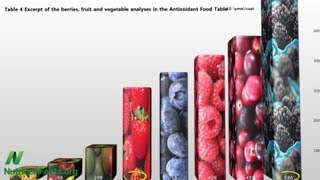
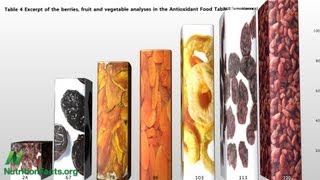
VegetablesAllium (onion-garlic) and cruciferous (kale/broccoli/cauliflower/cabbage/red cabbage)
Allium (onion and garlic) and cruciferous (those in green below) are the best among vegetables. Cancer cell proliferation under each vegetable:

Breast cancer cells (MCF-7)

Brain cancer cells (U-87 glioblastoma)

Kidney cancer cells (Caki-2)

Lung cancer cells (A-549)

Childhood brain cancer cells (Daoy medulloblastoma)

Pancreas cancer cells (Panc-1)

Prostate cancer cells (PC-3)

Stomach cancer cells (AGS)
Nutswalnuts and pecans
Walnuts and pecans are the best among nuts. Cancer cell proliferation under each nut:

Liver cancer cells (HepG2) · values approximate

Colon cancer cells (Caco-2) · values approximate
Antioxidant activity of each nut:

Total antioxidant activity · Yang, Liu & Halim (2009)

ORAC score · USDA ORAC database
Observe that walnuts and pecans are consistently the top 2 in all of these, while third place is much less replicable. Just eat ~30-40g walnuts and pecans. You don’t need to eat any other nut.
Omega-3fish, chia seeds (for men) or flax seeds (for women)
For ω-3, the ideal is fish; if you’re vegetarian, eat at least 50g of chia seeds (for men) or flax seeds (for women). PSA, sabja is not chia seeds.
This is very important, do not skip it! Lack of ω-3 is one of the most serious failings of the modern diet. It’s essential for heart health and for the brain — it’s also the lowest-hanging fruit improvement you can make in your life for those who are clinically depressed.
Proteinnon-fat dairy, eggs, white meat
Eat non-fat dairy. Eggs are great, don’t worry about the dietary cholestrol, that’s not what increases your body’s cholestrol levels. Don’t eat red meat, chicken is fine.
MUFA-rich oilsavocado, olive, macadamia, maybe mustard, high-oleic breeds
The MUFA-rich oils are: avocado, olive, macadamia and to an extent mustard. Avocado oil is perfect for cooking due to its high smoke point; olive oil is the richest in polyphenol content when not heated and you should drizzle it raw to your foods. There are also “high-oleic” (oleic=MUFA) seed oils created by selective breeding, I would guess those are fine too.
Spicemaxx. Especially Amla.
Spices are GOOD. The only spice to be a little careful about is chillies, as prolonged irritation to the digestive tract can cause cancers of the stomach and colon. But:
- ginger, turmeric
- cardamom, cloves, (ceylon) cinammon
- black pepper
- cacao powder
- matcha powder (i.e. green tea)
are all some of the most antioxidant-rich foods in the world.
And there is one, single, god-tier food in the world that you must consume if nothing else — and that is Amla:

Better than Goji Berries (watch this video: you’ll get literal goosebvmps for the gooseberry)
IBringing it all together: the bare minimum diet.
Every single person I know who gets serious about diet optimization (myself, Bryan Johnson, a friend, some other guy I saw online), and actually applies a rational and scientific approach rather than falling for BS, ends up independently converging to a very similar diet to this, so I’ll just give it to you.
Breakfasta “nutty pudding”:
- 2 scoops whey
- 5 tbsp spices: 2 tbsp cacao, 1 tbsp matcha, 2 tbsp cardamom+cloves+cinammon+pepper+ginger+turmeric+amla powder
- sweetener (allulose, monk fruit or stevia)
- 30-40g walnuts and pecans
- 50g chia (or flax for foids) seeds
- 150g blueberries
Luncha legume padhārtha:
- raw onion & garlic
- masala of your choice
- 1 can (300-400g cooked) legumes e.g. chana
- tomato puree
- kale powder
- broccoli sprouts
- 15ml olive oil
Misc
- 2 large eggs in any form (note that 1 egg is only 8g protein)
- 500ml non-fat dairy in any form
- 150g pomegranates
This is a bare minimum starting point, of only 2000 calories and amounts to a macro ratio of 33:33:33, so you are going to want to add some carbs (e.g. whole grains) and fats (e.g. macadamia nuts, or more oil).
But if you start with this much, it covers all your micronutrient needs (I’ve checked), except being a little low on Vitamins B3 (60% RDA), B9 (84% RDA) and E (70% RDA), which will be covered by the slightest addition to your diet.
If you’re a woman you can use this diet as-is without adding anything, since your nutritional needs are lower — maybe swap out 1 scoop of whey for some carbs to get the macro ratios in order.
If you are losing weight, you can use this diet as-is without changing anything.
Appendix
The modern Indian’s diet is bad. Note that I say “Indian’s diet”, not “Indian diet” which is a much more complex historical topic — this is a simple empirical fact, and it’s not just protein: Indians have a child stunting rate of 36%, some of the lowest fruit and vegetable consumption in the world (!), and the highest Hidden Hunger Index in the world barring only a few sub-saharan countries7, 8.
Moreover, Indian diet discourse is extremely useless and misinformed: e.g. in India, non-vegetarians do even worse than vegetarians on protein9. You have twitter “doctors” of every real, vestigal and conjectured organ in the body whose source of information about diet is some quack “carnivore diet” fatbro, fighting random aunties who think whey protein is an anabolic steroid and ghee cures cancer.
Such grift is enabled by the absence of basic functional knowledge among the proles, which this post fixes.
There is a lot that is wrong with framing modern India’s failures on nutrition to the “traditional Indian diet”, apart from being simply counterproductive:
- there’s nothing really “traditionally Indian” about modern Indian dishes, like “south american vegetable deepfried in sunflower oil and sandwiched between buns”.
- basically all the traditional diets of pre-industrial societies are “carbslop”. There’s a reason the famed Mediterranean diet, whose being “healthy” owes to being relatively untouched by modernity, is so high on carbs (which is its weakness, to be clear).
- The excessive consumption of refined grains, sugar and ghee is due to misgeneralization from circumstances in the past — where these were expensive items and thus status symbols — to today, where they are abundant and make you fat.
- there are many good things in the Indian diet, and the baby shouldn’t be thrown out with the bathwater. Āyurveda made many important contributions to biology and surgery, and it is disgraceful to downplay this.
You will eat the LEGVMES, and you will like it.
Veg vs non-veg, the Indian diet and other tiring discourse
Veg vs non-veg
Also published on Twitter
This tiring veg non-veg debate will never end, but I will do my best
- Yes, Indian protein consumption (10% of total calories) is lower than optimal (20%).
- India’s more vegetarian states actually do slightly better on this: (cc: @indiainpixels)


- Instead, our protein consumption is entirely explained by our income level.
- However, it is true that a vegetarian diet cannot provide the requisite 20%, unless it contains skim milk, eggs or protein powder (or soy, but that’s cringe), because all other veg foods, including whole milk, are <= 20% protein.

- Dietary advice for upper and lower class Indians should be very different. For the poor, by far the main cause of poor health outcomes (malnutrition, stunting) is low overall caloric intake and micronutrient intake.
- For the upper class, standard Western hippie advice is applicable: legumes, mustard/olive oil, pomegranates/berries, onion/garlic/cruciferous veg, nuts etc.
- There are many good things about the Indian diet, and in vegetarianism, with regards to cancer prevention and neurodegenerative diseases. I would not throw the baby out with the bathwater.
- If you do eat meat, let it be fish. The fact that Indian BPs don’t advocate for this or any other high-value improvements (pts 5 and 6) and go straight to beef/pork is extremely sus.
Indian diet
Also published on Twitter
The main reason I don’t like the “Indian diet bad” takes is that “Indian food” is a very flexible category. The only meaningful sense in which “Aloo Gobi cooked in Sunflower Oil” is Indian is its spice palette, which is the only good thing about that dish.
If your take on the Indian diet isn’t eat less rice/potatoes, eat more nuts and legumes, cook in MUFAs and get 20% of your calories in protein
but instead yOu mUSt EAT beAF BuRGEr
you don’t actually care about health and fitness, you just have mommy issues.
Indian spices are good. Legumes are good, and the Indian legume palette is uniquely palatable. Most diets were historically carb-dominated, until countries got rich. The famed Italian diet still is. This isn’t something that can’t be fixed. See also:
Basic guidance
Also published on Twitter
It’s not that hard. The basic macro guidance for vegetarians should be: Let legumes, rather than grains, be the basis of your diet, eat at least 600 calories worth of dairy (ideally non-fat) or eggs, cook in mustard oil, eat a ton of f&v (starchy vegs don’t count), eat 50g nuts.
Micro guidance would be:
- among fruits, eat pomegranates/darkly-colored things
- among vegetables, eat greens (and cruciferous if you can afford it) and raw onion/garlic
- among nuts, pick walnuts (and chia/flax if you can afford it)
- eat spices other than cumin & coriander.
Footnotes
-
Yes, even at your “reputed restaurant”, and even if you’re not ordering something deep-fried. The oil you’re eating will (1) have been deep-fried in multiple times and become carcinogenic (2) include grease from sources like fryers, kitchen waste, slaughterhouse waste and sewer drains.
Yes sār, even the oil in your vegetarian restaurant is filled with grease from slaughterhouses. ↑
-
You can find out by looking at the protein and fibre content in the nutritional info. Whole wheat (dry) is 13% protein and 10% fibre by weight; similarly brown rice is 8% protein and 5% fibre by weight. Anything less is circumcised. ↑
-
“Oh but SeedOilDestroyer429 told me saturated fats are good!” No, shut up. Saturated fats causing heart disease and raising LDL is the single most replicated finding in all of nutrition.
Bullshit artists will make stupid Nehru-vs-Ambedkar comparisons like “it’s the CARBS that are bad for you, not saturated fats” — I don’t care, both are bad. I didn’t ask for a comparison.
“But seed oils are evil, they’re inflammatory!” — I didn’t tell you to eat seed oils. I’ll tell you what to eat when I feel like it. Keep reading, doublechin.
Use the coconut oil for your hair and the ghee for your diyās. ↑
-
These are from a guy called Michael Greger who runs a website called nutritionfacts.org. I don’t take him fully seriously, because he’s a motivated vegan propagandist so he does a lot of selective reporting of studies evaluating animal foods. But where he shines is in comparisons between different plant foods, because there’s no agenda-peddling incentive for him there. ↑